Supporting since 2004
Location
Madagascar
Support started
2004 – 2014 and 2017 onwards
Species
Lemur species
Mission
To advance the understanding and conservation of Madagascar’s lemurs through scientific research, captive propagation, and protection of their natural habitats.
Donations:
Donations pay for an association membership to work with the local community of the Sahamalaza peninsula in Madagascar to promote lemur conservation.
2025:
£1,736.83 donated this year.
Background
The Association Européenne pour l’Étude et la Conservation des Lémuriens (A.E.E.C.L) is a charitable NGO run by a consortium of European Zoos, working for Madagascar’s highly endangered lemurs, through cooperation with the Malagasy people.
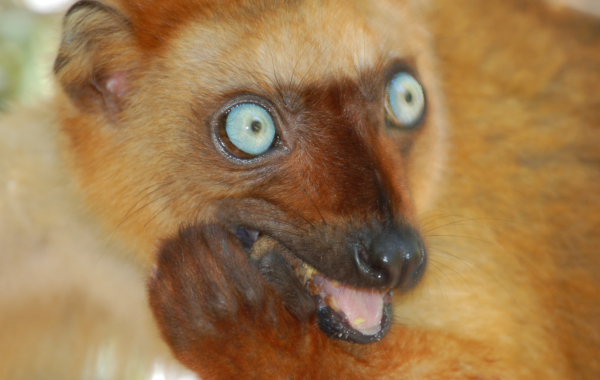
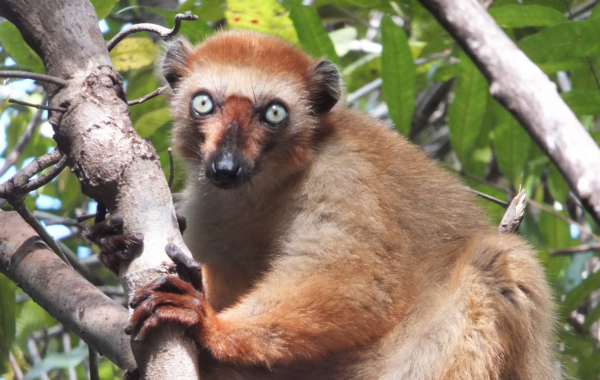
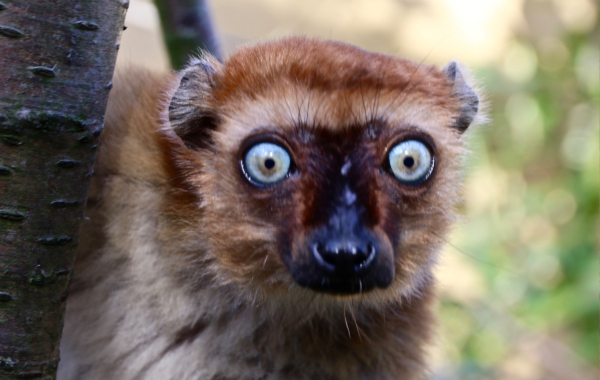
The Sahamalaza region has been the A.E.E.C.L’s focus of scientific and conservation interest since 1988. The critically endangered blue-eyed black, or Sclater’s, lemur is endemic to this part of Madagascar, and has been selected by the A.E.E.C.L as the flagship species for all conservation efforts concerning the region.
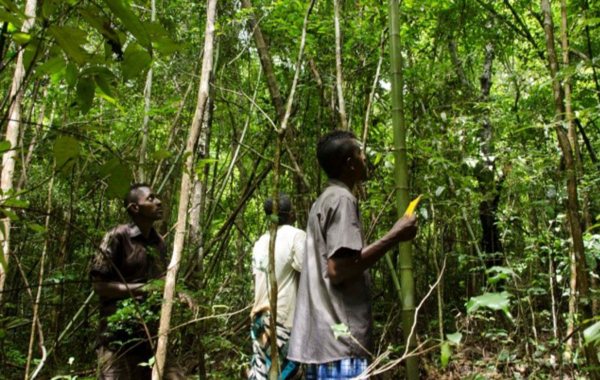
The A.E.E.C.L aims to protect the habitat and ecosystems within the Sahamalaza peninsula, monitor and increase lemur populations and be a strong conservation ambassador for the area. A vital part of the work of the A.E.E.C.L is to monitor the lemur numbers and research the local ecosystems to have a better understanding of the pressures faced by these habitats.
Achievements and Objectives
The AEECL aims to advance the understanding and conservation of Madagascar’s lemur populations through scientific research, captive propagation and protection of their natural habitat. Investment in local communities through education, resource management and communication helps ensure the communities of today can forge a safe haven for wildlife tomorrow.
In 2025, Colchester Zoological Society gave its £1,736.83 membership fee to support the work of AEECL.
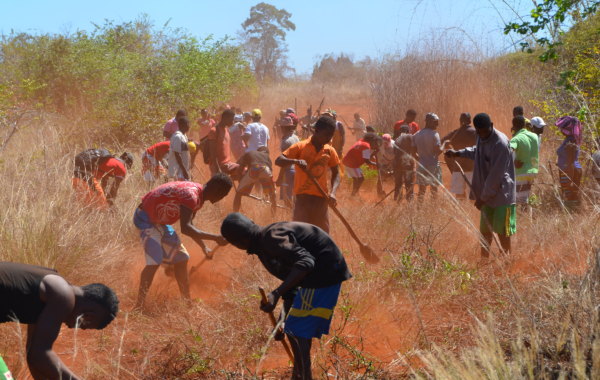
In 2025, young plants were transferred from the production sites to the reforestation area during the rainy season (January and February). The local population is paid for transporting the young plants and for digging the holes. The Andranotsiritry forest is the target location for the 2025 reforestation campaign; 7,819 seedlings of seven species were planted, covering approximately nine hectares.
The AEECL participated in various celebrations organised by the local authorities including a reforestation event, Women’s day in March and a cultural celebration in May that symbolizes the agreement between the local population and the Madagascar National Parks.
Support also continued for foreign students and researchers helping make their research effective and impactful. The AEECL provided field support for students studying amphibians in Sahamalaza Iles-Radama National Park (SIRNP) in Northwest Madagascar and microbiota and parasites in blue eyed black lemurs.
Monthly support was provided for teachers in three municipalities, with subsidies paid for 10 months of the year to ensure teachers carry on delivering education to students and to teach about conservation and the work of the AEECL, so future generations will support and protect the ecosystems around them.
AEECL worked to ensure effective data collection of lemur surveys across the Sahamalaza Iles-Radama National Park (SIRNP). Monthly surveys were conducted to assess female reproduction of blue-eyed black lemurs; this research contributes to the protection and understanding of the species by providing key information on their reproductive biology and health. Results found that, in Ankarafa, each year 1 to 3 females per group give birth compared to 1 female per group in Anabohazo. A second study looked at population estimates, as the species is endemic to this region. Assessment of lemur distribution, presence, and density in the forest fragments of the National Park found that blue-eyed bloack lemurs were estimated at 0.89 individuals/ha in Ankarafa and 0.93 individuals/ha in Anabohazo.
Click for 2024 Summary
- In 2024, Colchester Zoological Society gave its £1,747.34 membership fee to support the work of AEECL.
- In 2024, during the Regional Reforestation event, the AEECL planted 50 trees in Anahidrano village, about 25km north of Antsohihy. The project’s main site for the reforestation programme is in Andranotsiritry; the reforestation area begins at the edges of the Andranotsiritry forest and extends over a vast savannah. During the planting season, 6,586 young plants from four species were provided by the 2 community nurseries and these were planted over 4ha. Young plants continue to be checked over and watered and the area around them tidied to help with the tree growth.
- AEECL support the women in local communities in Antsohihy and in celebration of International Women’s Day in 2024, provided 25 T-shirts, and a special celebration meal to all participants who represented AEECL.
- The team attended the biodiversity annual event in Anjiabory which included a celebration lunch, information stands, speeches by the authorities in attendance and networking with the NGOs who work in the Sofia region. AEECL donated to support the celebration.
- A Master’s research student, supported by AEECL, studied at various locations throughout the area, looking at ‘assessing the potential for soil restoration in rice paddies in the Sahamalaza region, using soil tests and social science.’ The AEECL helped the student to organise her research permit, organised a Malagasy student to assist her and supported her data collection.
- The AEECL hosted another day of road repairs which saw 178 people attend from four villages and approximately 17km of road either fixed or newly created. Most of the worst sections were fixed and AEECL provided food for the event.
- AEECL subsidises 78 teacher wages from 3 communes to ensure they are earning a salary whilst teaching the children good skills, including nature-based studies. By subsidising their salaries, the AEECL can improve the educational programmes of the local communities.