Supporting since 2010
Location
Kafue National Park, Zambia
Support started
2010
Species
African Elephant
Mission
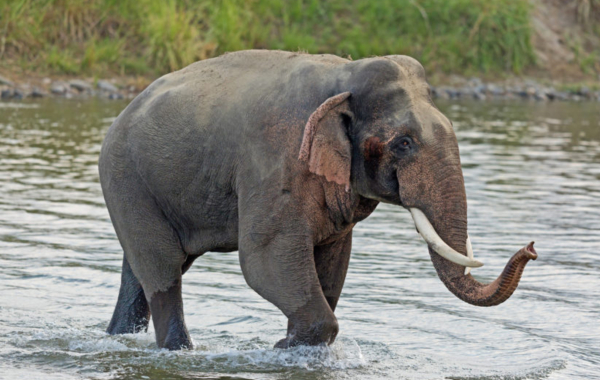
The Elephant Orphanage Project (EOP) is working to rescue, rehabilitate and release elephants that have been orphaned as a direct result of poaching.
Donations:
Annual donation towards the costs for veterinary care and food for the elephants and to support the wage of one of the elephant caregivers. Funds enable the day-to-day care of the orphans, assist in the rescues of new orphaned calves, and promote the well-being of newly rescued calves, who are extremely vulnerable.
2025:
£10,000 donated this year.
Background
The Elephant Orphanage Project was established in Zambia in southern Kafue National Park (KNP) in 2007 with the mission to rescue, rehabilitate and release orphaned elephants back into the wild. The EOP is the only programme of its kind in Zambia and Colchester Zoological Society has provided this project with vital support since 2010.
The programme follows a four-stage process:
- Rescue – Initial capture from wild scenario whereby elephant calves have become orphaned (usually health is compromised, and the calf is under great stress)
- Rehabilitate – Orphans raised with a high level of care at the Elephant Nursery from point of rescue until weaning age (approx. 3 years)
- Release – Orphans >3 years old are transferred to Kafue Release Facility to be weaned from milk and supplementary feeding; gradually reducing dependency on human support over the years until they are ready (emotionally, physically, socially) to be reintegrated with wild elephants and live back in the wild
- Research – Data collected on all elements of orphaned elephant rescue, rehabilitation and release to further understanding of all processes and ensure systems are constantly reviewed to ensure the best possible results for collaboration and information sharing across networks.
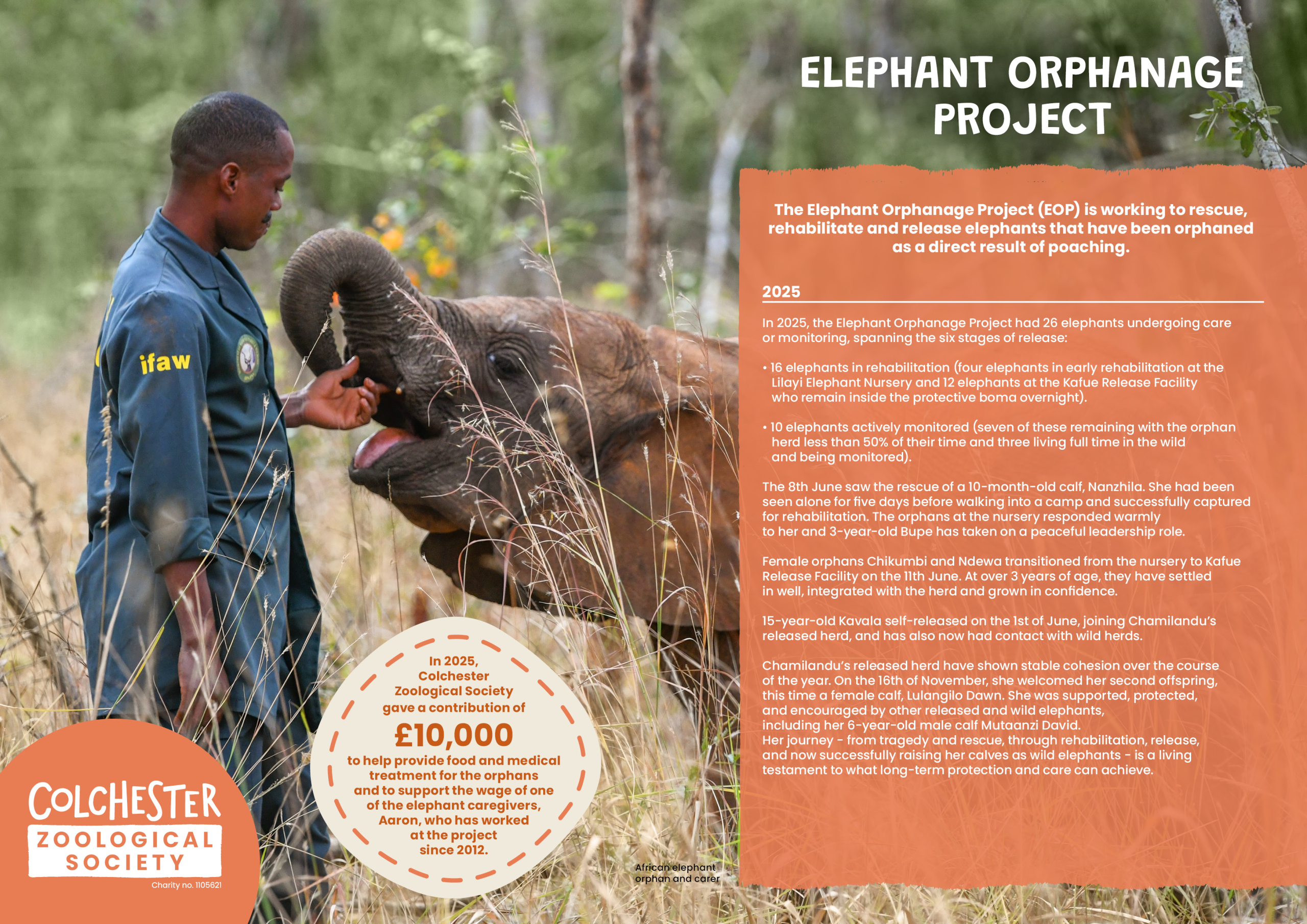
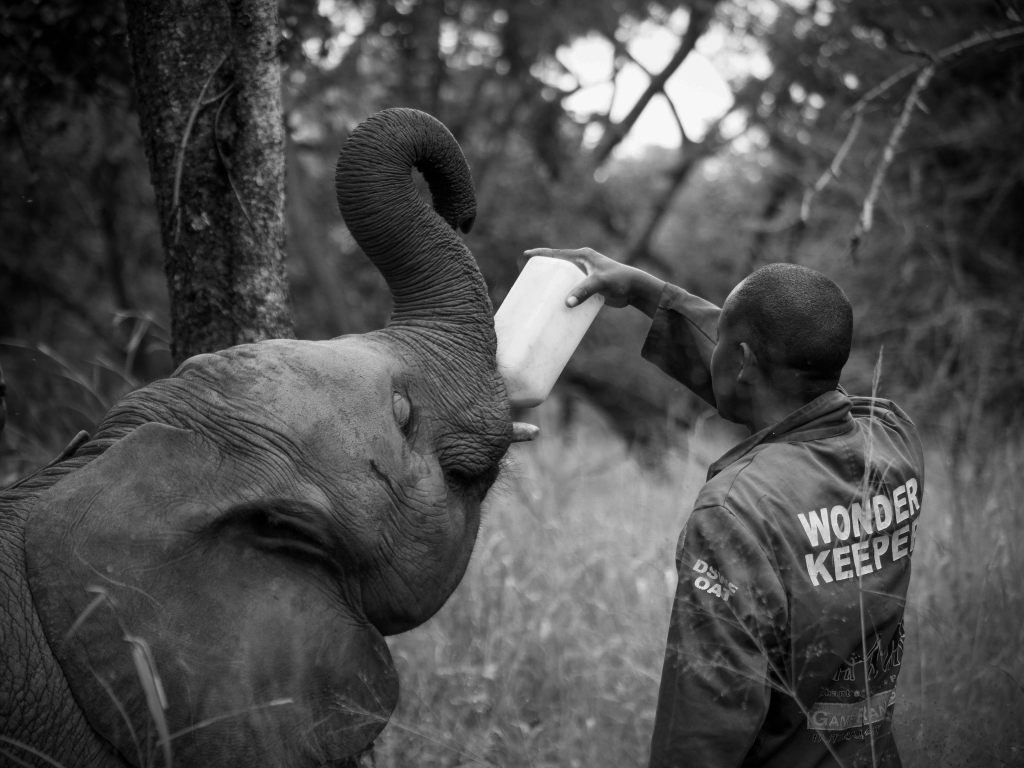
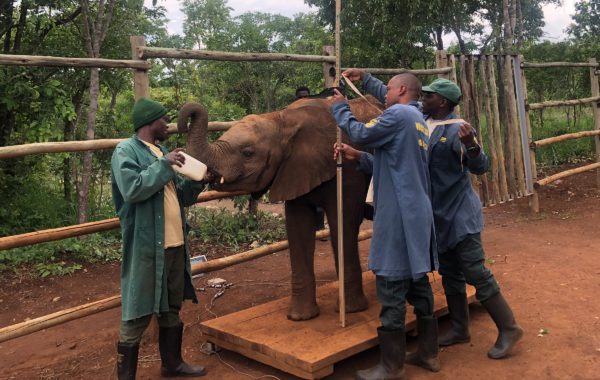
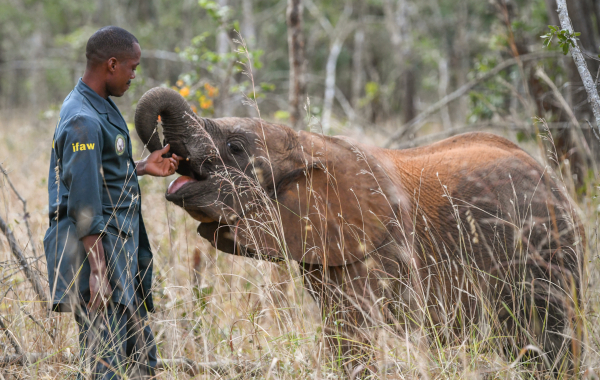
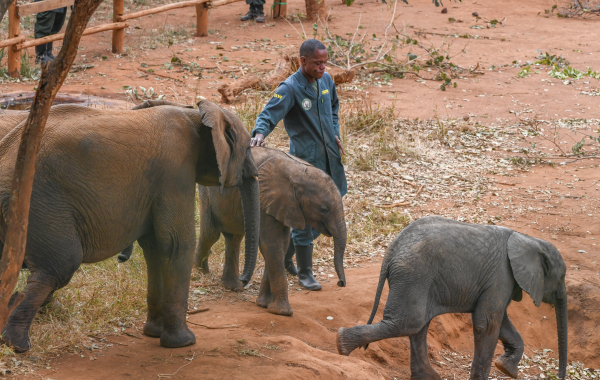
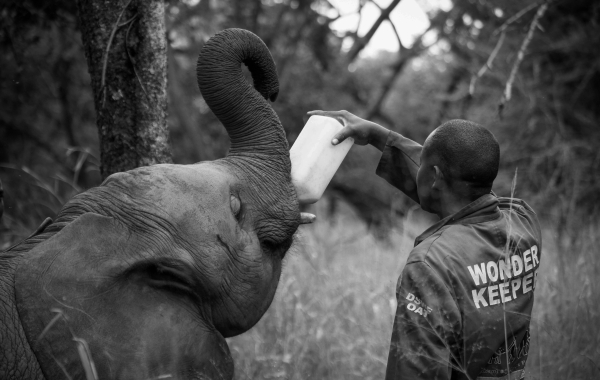
The Elephant Orphanage Project has developed two facilities to provide the specific care requirements for the elephant orphans it receives. EOP offers a mobile rescue unit, which aims to respond to orphan alerts within 12 hours of contact and transport the calves to the EOP Lilayi Elephant Nursery (LEN) where these fragile elephants are cared for around the clock. A team of locally employed, highly trained keepers care for them and watch over them constantly – whether out during their daily walks or sitting close by their stables at night. Together with their new ‘siblings’ and keepers, these young elephants learn to overcome the tragic loss of their natal family, as they browse, play and bath together within a natural environment. As soon as the calves can be weaned from milk, they are moved to the Kafue National Park to join other older orphaned elephants at EOP Kafue Release Facility (KRF) where they become more independent of human support and spend most of their time browsing freely in the National Park.
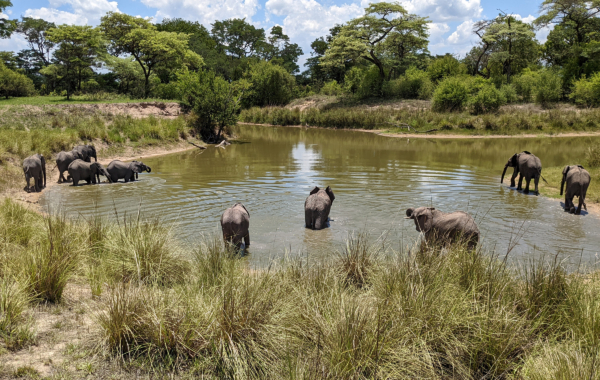
The facility backs onto the ancient Ngoma Teak Forest where there is a significant local elephant population, which maximises the opportunity for the orphans to eventually reintegrate with fellow elephants back in the wild. Over time, the orphans become more independent of the facility and younger herd and will start to live further away, demonstrating their interest and ability to live back in the wild where they belong.
The need for the Elephant Orphanage Project has been consistent over the years with poaching as a persistent challenge and an ever-increasing loss of elephants due to conflicts occurring as human expansion and farming is increasingly prevalent nearer to Parklands and often blocking elephant migration routes. As the EOP herd increases in numbers, support from organisations such as Colchester Zoological Society is vital in helping to raise much needed awareness of the plight of wildlife species as a result of poaching, provide financial support to critical projects and ensure the long-term survival of the recovering elephant herds and other wildlife species in the Park.
“My interest in saving animals started with a one month old orphan elephant called Zambezi,
I had to look after him 24/7 and it was the best times I’ve ever had in my life.”
– Aaron Gumbo, Elephant Keeper.
Achievements and Objectives
The Elephant Orphanage Project (EOP) is working to rescue, rehabilitate and release elephants that have been orphaned as a direct result of poaching. The ultimate aim is to continue to facilitate the release of the elephants back into the wild. Post-release they will continue to be studied and observed to determine their ability to integrate within wild elephant society.
In 2025, Colchester Zoological Society gave a contribution of £10,000 to help provide food and medical treatment for the orphans and to support the wage of one of the elephant caregivers.
At the end of 2024, the Elephant Orphanage Project’s had 26 elephants undergoing care or monitoring, spanning the six stages of release:
- 16 elephants in rehabilitation (4 elephants in early rehabilitation at the Lilayi Elephant Nursery and 12 elephants at the Kafue Release Facility who remain inside the protective boma overnight).
- 10 elephants actively monitored (7 of these remaining with the orphan herd less than 50% of their time and 3 living full time in the wild and being monitored).
The 8th June saw the rescue of a 10-month-old calf, Nanzhila. She had been seen alone for five days before walking into a camp and successfully captured for rehabilitation. The orphans at the nursery responded warmly to her and 3-year-old Bupe has taken on a peaceful leadership role.
Female orphans Chikumbi and Ndewa transitioned from the nursery to Kafue Release Facility on the 11th June. At over 3 years of age, they have settled in well, integrated with the herd and grown in confidence. 15-year-old Kavala self-released on the 1st of June, joining Chamilandu’s released herd, and has also now had contact with wild herds.
Chamilandu’s released herd have shown stable cohesion over the course of the year. On the 16th of November, she welcomed her second offspring, this time a female calf, Lulangilo Dawn. She was supported, protected, and encouraged by other released and wild elephants, including her 6-year-old male calf Mutaanzi David. Her journey – from tragedy and rescue, through rehabilitation, release, and now successfully raising her calves as wild elephants – is a living testament to what long-term protection and care can achieve.
Click for 2024 Summary
- In 2024, Colchester Zoological Society gave a contribution of £10,000 to help provide food and medical treatment for the orphans and to support the wage of one of the elephant caregivers, Aaron, who has worked at the project since 2012.
- At the end of 2024, the Elephant Orphanage Project’s had 26 elephants undergoing care or monitoring, spanning the six stages of release:
- 17 elephants in rehabilitation (5 elephants in Stage 1 rehabilitation at the Lilayi Elephant Nursery and 12 elephants in Stage 3 at the Kafue Release Facility who remain inside the protective boma overnight).
- 9 elephants actively monitored (6 of these in Stage 5 spending nights outside the boma, remaining with the orphan herd less than 50% of their time and with one calf born in the wild, and 3 in Stage 6 living full time in the wild and being monitored).
- Stage 5 elephant female Chamilandu and her herd continue to periodically visit the Stage 3 release phase orphans to socialise on their daily walks and, throughout the last quarter of the year, maintained a consistent home range within 5 – 7 km radius of the Release Facility. These encounters evidence the strong bonds forged between the elephants and the trust they have built over time.
- Some of the Stage 5 orphans; Tafika, Rufunsa, and Mosi, have begun to explore other areas of the Kafue National Park, likely in search of more abundant and nutritious food sources. This break away from Chamilandu’s leadership and expansion of their range marks their growing independence and confidence in navigating the wild. Tafika ventured south and explored overlapping ranges with wild herds; this behaviour is essential for long-term survival and adaptation in male African elephants.
- After five months of exploring the wild, Stage 6 sub-adult bull Musolole, now 13.5 years, made an unexpected return to the Kafue Release Facility, reuniting with the orphans, likely in search of water due to the drought. He had been spotted in a group of around 50 wild elephants just 2 weeks before his return in excellent body condition.
- In November, an orphaned elephant was captured. He was in poor condition, which is currently very common during this extreme drought, but he was already of weaned age, so rather than go to Lilayi Elephant Nursery, he was immobilised to provide some basic medical treatment and immune boosters and relocated to an area closer to the National Park, away from settlements with more plentiful vegetation. Subsequent reports by the monitoring Rangers confirm he joined with a herd and moved off towards the Park.