Supporting since 2005
Location
Hluhluwe-iMfolozi Park in South Africa
Support started
2005
Species
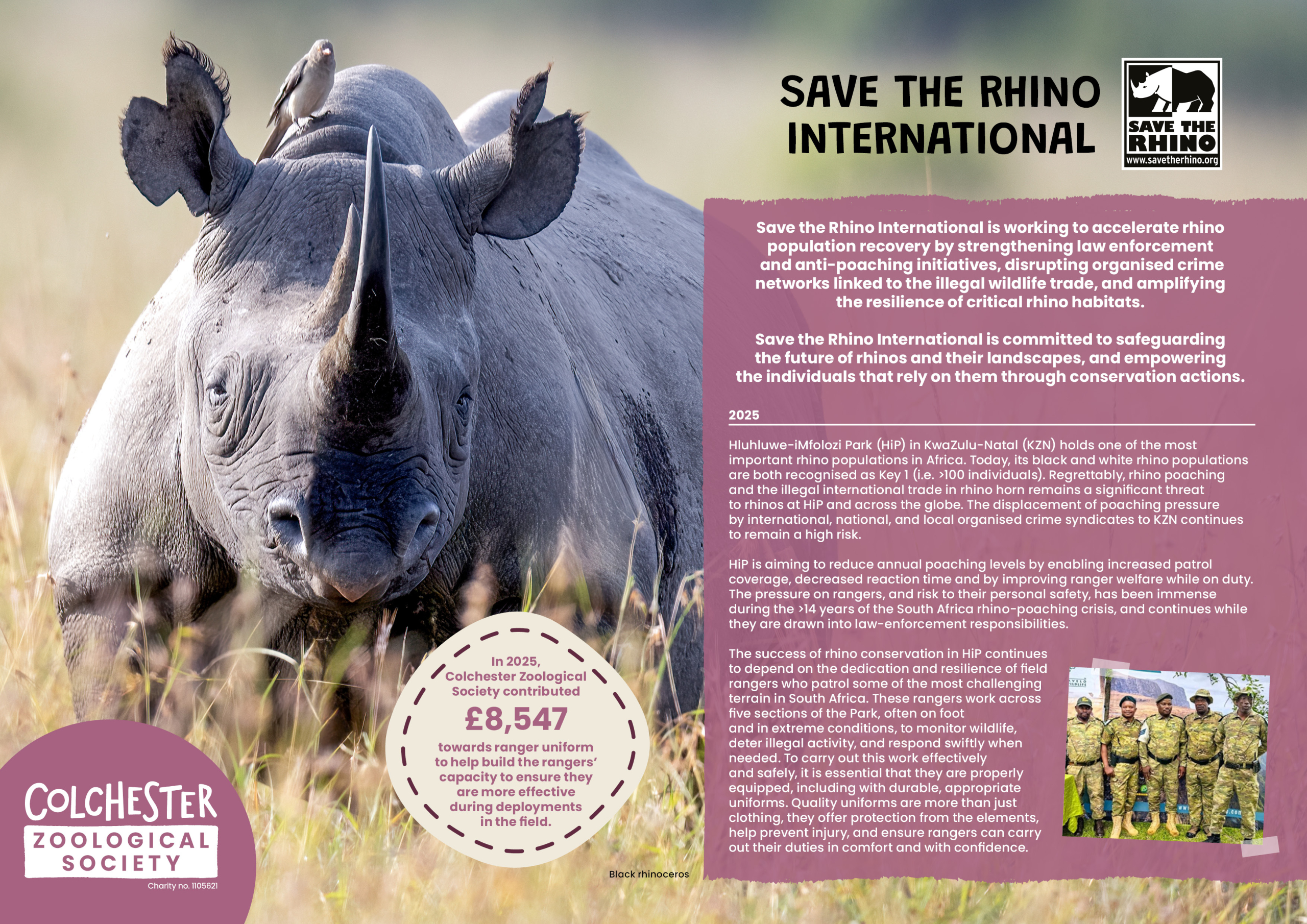
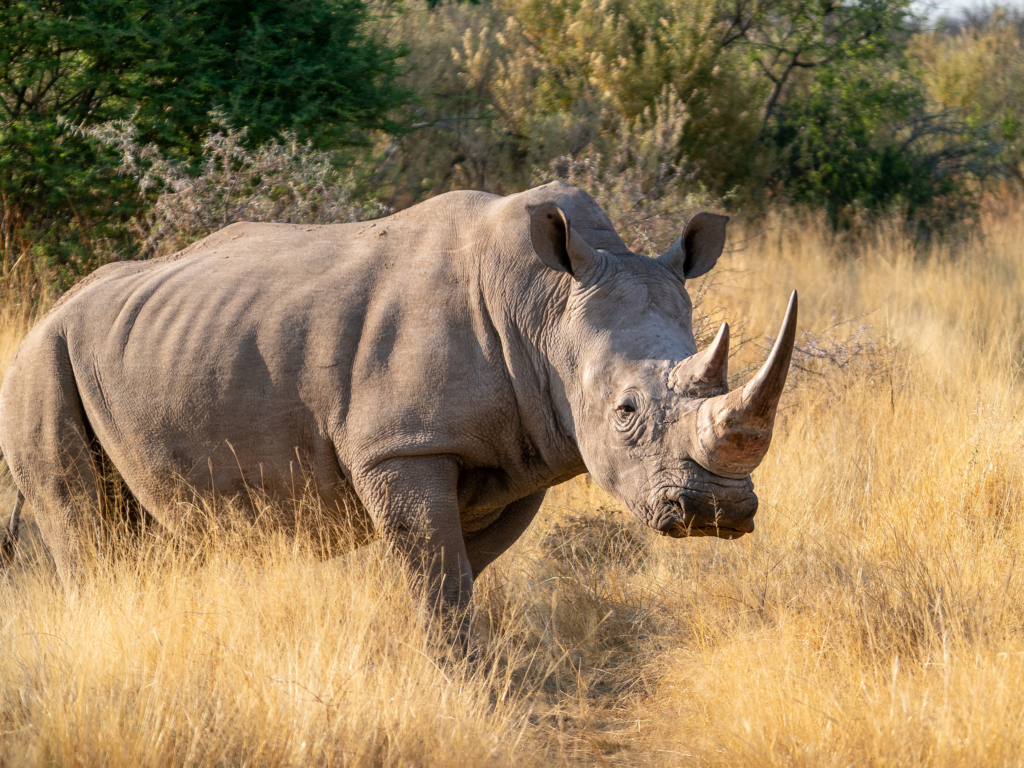
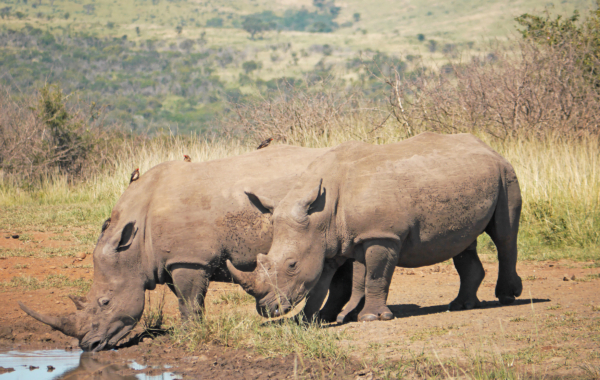
Black and White Rhinos
Mission
To uphold the security of the Hluhluwe-iMfolozi Park’s rhino populations by increasing the effectiveness of anti-poaching and monitoring activities, in order to ensure the continued and increased competence of field rangers in the reserve.
Donations:
To support rhino protection and conservation operations by funding vital repairs and equipment for law enforcement operations; providing essential support in the fight back against the rhino poaching surge.
2025:
£8,547 donated this year.
Background
Save the Rhino International is working to accelerate rhino population recovery by strengthening law enforcement and anti-poaching initiatives, disrupting organised crime networks linked to the illegal wildlife trade, and amplifying the resilience of critical rhino habitats. Save the Rhino International is committed to safeguarding the future of rhinos and their landscapes, and empowering the individuals that rely on them through conservation actions.
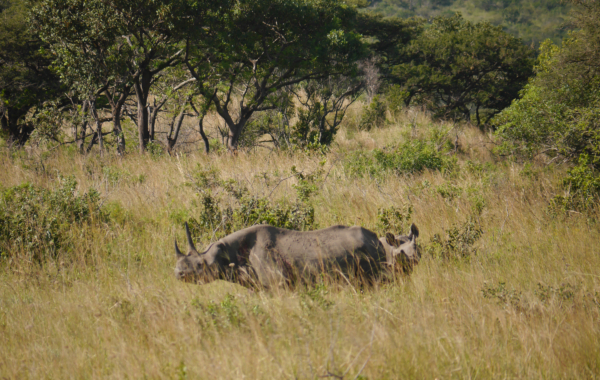
Hluhluwe-iMfolozi Park (HiP) in KwaZulu-Natal (KZN) holds one of the most important rhino populations in Africa. Today, its black and white rhino populations are both recognised as Key 1 (i.e. >100 individuals). Regrettably, rhino poaching and the illegal international trade in rhino horn remains a significant threat to rhinos at HiP and across the globe. The displacement of poaching pressure by international, national, and local organised crime syndicates to KZN continues to remain a high risk.
Achievements and Objectives
HiP is aiming to reduce annual poaching levels by enabling increased patrol coverage and decreased reaction time and reduce annual poaching levels by improving ranger welfare while on duty. The pressure on rangers, and risk to their personal safety, has been immense during the >14 years of the South Africa rhino-poaching crisis, and continues while they are drawn into law-enforcement responsibilities.
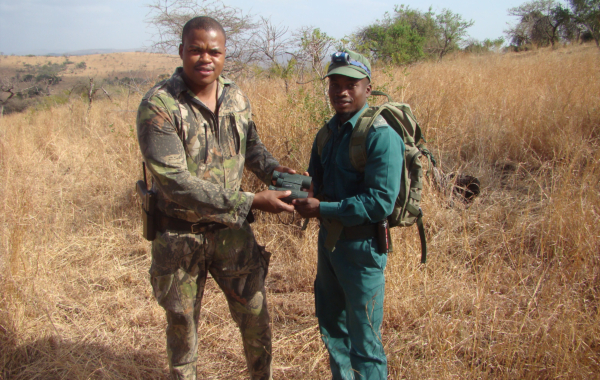
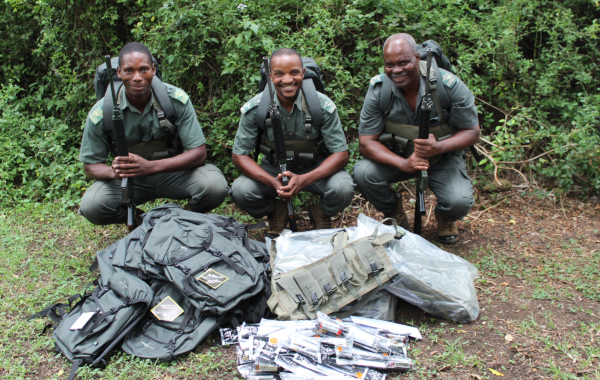
In 2025, Colchester Zoological Society gave a contribution of £8,547 towards ranger uniform to help build the rangers’ capacity to ensure they are more effective during deployments in the field.
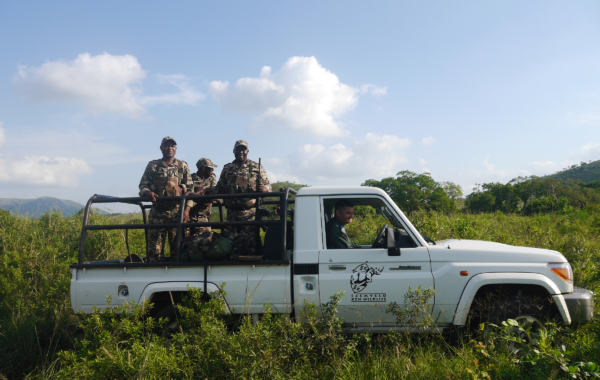
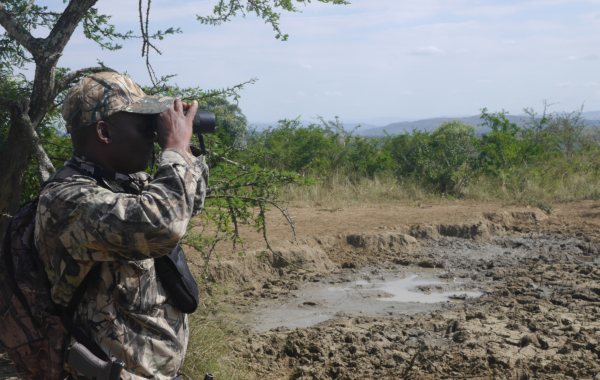
The success of rhino conservation in HiP continues to depend on the dedication and resilience of field rangers who patrol some of the most challenging terrain in South Africa. These rangers work across five sections of the Park, often on foot and in extreme conditions, to monitor wildlife, deter illegal activity, and respond swiftly when needed. To carry out this work effectively and safely, it is essential that they are properly equipped, including with durable, appropriate uniforms. Quality uniforms are more than just clothing, they offer protection from the elements, help prevent injury, and ensure rangers can carry out their duties in comfort and with confidence.
Click for 2024 Summary
- In 2024, Colchester Zoological Society gave a contribution of £6,900 to purchase rifle safes for the safeguarding of field rangers’ rifles and to meet emergency repairs or replacement for patrol equipment for rangers.
- This donation helps towards Hluluwe-iMfolozi National Park’s objectives to reduce annual poaching levels, by enabling increased patrol coverage, decreased reaction time and by improving ranger welfare while on duty.
- The first quarter of 2024 saw rhino carcasses continue to be found following poaching incidents. Following a major dehorning operation in April, the next quarter saw a reduction in rhino poaching and overall, this decrease continued for the rest of the year. Unfortunately, there is still a market for dehorned rhino, so the teams remain ever vigilant to ensure continued protection of the reserve’s rhinos.
- Field ranger training sessions continued in the Park in 2024, new uniform provision, ongoing efforts to maintain the field ranger camps and the purchase of new equipment, such as tents, and ration packs, all help build the ranger units’ capacity, helping to ensure individuals are more effective during deployments in the field.