Supporting since 2011
Location
Laos and Cambodia
Support started
2011
Species
Malayan sun bear and moon bear
Mission
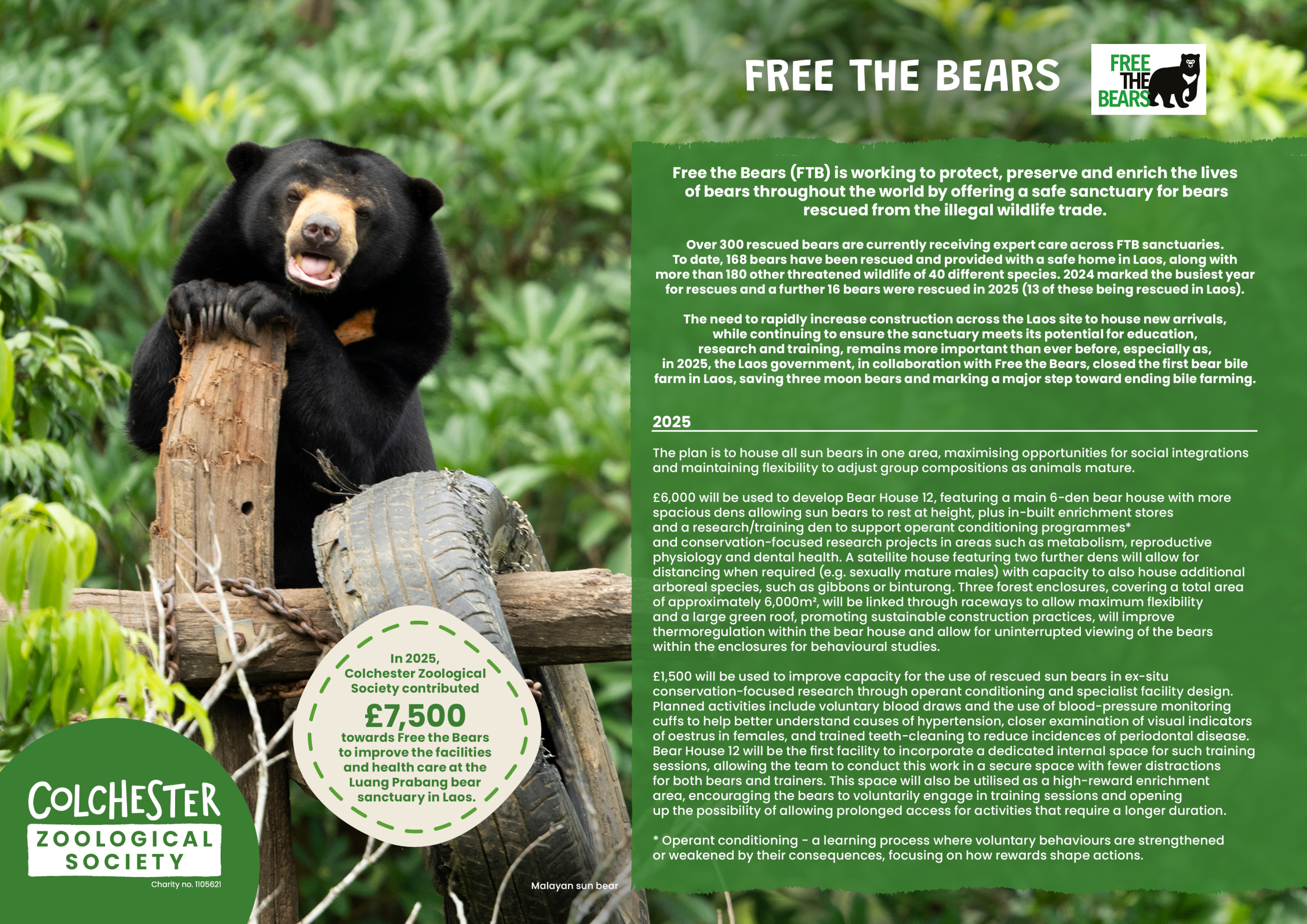
Free the Bears (FTB) is working to protect, preserve and enrich the lives of bears throughout the world by offering a safe sanctuary for bears rescued from the illegal wildlife trade.
Donations:
Annual donations to help develop the rescue centre in Laos and support their work with the bears.
2025:
£7,500 donated this year.
Background
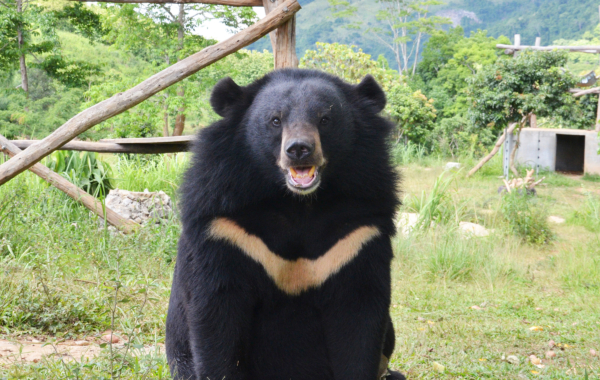
Free the Bears has been working with the Cambodian Forestry Administration to provide a safe sanctuary for bears rescued from the illegal wildlife trade in Cambodia since 1997. Today the Cambodian Bear Sanctuary is the worlds’ biggest sanctuary for sun bears, home to rescued bears housed in world-class forest enclosures. Additionally numerous sun bears have been sent to join cooperative breeding programmes in Australasia and Europe, including Colchester Zoological Society’s own pair of sun bears; Srey Ya and Jo Jo.
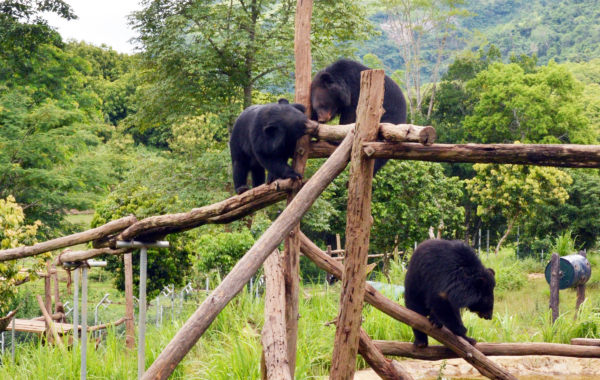
Free the Bears has been working in Laos since 2003. Since then, more than 100 bears have been confiscated or have been donated. As a result of strengthened law enforcement efforts, bears have been rescued and relocated to a sanctuary at Luang Prabang. This facility contains a quarantine area, numerous bear houses plus adjoining forest enclosures, including pre-release enclosures to begin the process of trialling the processes required to successfully rehabilitate rescued bears in order to return them to the wild.
Achievements and Objectives
Free the Bears (FTB) is working to protect, preserve and enrich the lives of bears throughout the world by offering a safe sanctuary for bears rescued from the illegal wildlife trade.
Over 300 rescued bears are currently receiving expert care across Free the Bears’ sanctuaries. To date, 168 bears have been rescued and provided with a safe home in Laos, along with more than 180 other threatened wildlife of 40 different species. 2024 marked the busiest year for rescues and a further 16 bears were rescued in 2025 (13 of these being rescued in Laos). The need to rapidly increase construction across the Laos site to house new arrivals, while continuing to ensure the sanctuary meets its potential for education, research and training, remains more important than ever before, especially as, in 2025, the Laos government, in collaboration with Free the Bears, closed the first bear bile farm in Laos, saving 3 moon bears and marking a major step toward ending bile farming.
2026 Update 06.08
Free the Bears have been inundated with bear rescues this year with 45 bears rescued so far in Laos, and the first rescue of the year in Cambodia this week. With this number of bears, the team are working to keep their heads above water; managing the bear moves, overseeing construction and trying to get further land purchased to extend the sanctuary so that they can create some new life-long care facilities for these bears.
In 2025, Colchester Zoological Society provided funds for the construction of Bear House 12A for resident sun bears.
Construction of Bear House 12 could not have come at a better time – not only to improve the levels of care and welfare offered to so many of the existing sun bears, but also to free up space so that some of the new arrivals could be quarantined and enjoy stepping out for the first time in years.
Whilst Bear House 12A was initially planned for younger sun bears and gibbons, later on this week, the team will be starting to move the 2nd group of the 27 bears rescued from the bile farm out of quarantine and into Bear House 12A; 7 former bile farm bears can thus enjoy greater welfare. Free the Bears still hope to get the bile farm moon bears full-time homes built by the end of this year – fundraising, land purchases and construction schedules permitting and then the younger sun bears can enjoy their home as planned.
Click for 2025 Summary
- In 2025, Colchester Zoological Society gave a contribution of £7,500 towards Free the Bears.
- £6000 to be used to increase the capacity of the Laos Luang Prabang Wildlife Sanctuary for housing rescued sun bears in the new Bear House 12.The plan is to house all sun bears in one area, maximising opportunities for social integrations and maintaining flexibility to adjust group compositions as animals mature.
- Bear House 12 will include a main 6-den bear house featuring more spacious dens allowing sun bears to rest at height, plus in-built enrichment stores and a research/training den to support operant conditioning programmes and conservation-focused research projects in areas such as metabolism, reproductive physiology and dental health. A satellite house featuring two further dens will allow for distancing when required (e.g. sexually mature males) with capacity to also house additional arboreal species such as gibbons or binturong. Three forest enclosures, covering a total area of approximately 6,000m2, will be linked through raceways to allow maximum flexibility and a large green roof, promoting sustainable construction practices, will improve thermoregulation within the bear house and allow for uninterrupted viewing of the bears within the enclosures for behavioural studies.
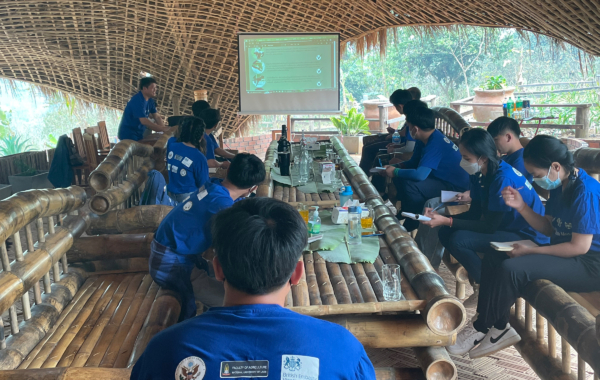
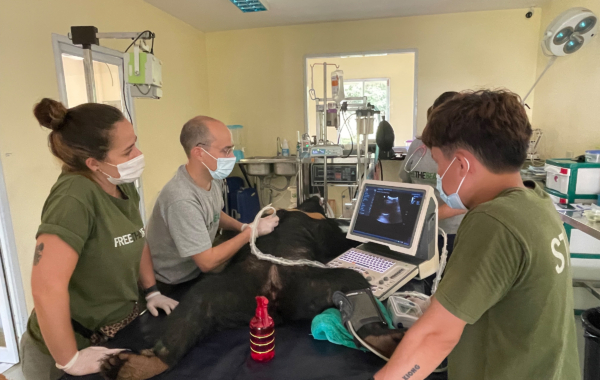
- £1,500 will be used to improve capacity for the use of rescued sun bears in ex situ conservation-focused research through operant conditioning and specialist facility design. Planned activities include voluntary blood draws and the use of blood-pressure monitoring cuffs to help better understand causes of hypertension, closer examination of visual indicators of oestrus in females, and trained teeth-cleaning to reduce incidences of periodontal disease. Bear House 12 will be the first facility to incorporate a dedicated internal space for such training sessions, allowing the team to conduct this work in a secure space with fewer distractions for both bears and trainers. This space will also be utilised as a high-reward enrichment area, encouraging the bears to voluntarily engage in training sessions and opening up the possibility of allowing prolonged access for activities that require a longer duration.
Click for 2024 Summary
- In 2024, a record 34 bears were rescued. This included the world’s largest rescue of threatened bear cubs, involving 16 tiny cubs ranging in weight between 1.3kg and 4kg. Sadly, one of the cubs didn’t make it, however, the 15 survivors are now healthy and strong. Many of the other bears rescued were also orphaned cubs, two of which had horrific wounds from wire snare traps, although thankfully both are now on the road to recovery. Older bears were also rescued, that had been caged for many years, including a golden moon bear. All of these bears have been spared a life of pain, fear and suffering and will join the hundreds of rescued bears at Free the Bears’ sanctuaries.
- In 2024, Colchester Zoological Society gave a contribution of £7,500 towards Free the Bears; £6000 towards the expansion of the Laos sanctuary’s sun bear facilities to help create a second facility and new group of sun bears during 2025, as four sun bears were rescued in 2024. The other £1,500 towards recruitment of a new Behavioural Research Assistant, including sample collection from a male sun bear who will have an implant fitted to control sperm production. This represents a rare opportunity to integrate behavioural observations with hormonal monitoring to analyse the effects of contraceptive use on male social and reproductive behaviours to help inform future contraceptive practices in captive bear populations.