Red Pandas are currently classified as Endangered on the IUCN Red List of Threatened Species, with as few as 2,500 left in the wild. Their forest homes in the Himalayas are shrinking due to deforestation and climate change. Here at CZS, we support global conservation efforts through education, breeding programmes, and partnerships with organisations like the Red Panda Network who we have supported for over 10 years.
International Red Panda Day
International Red Panda Day
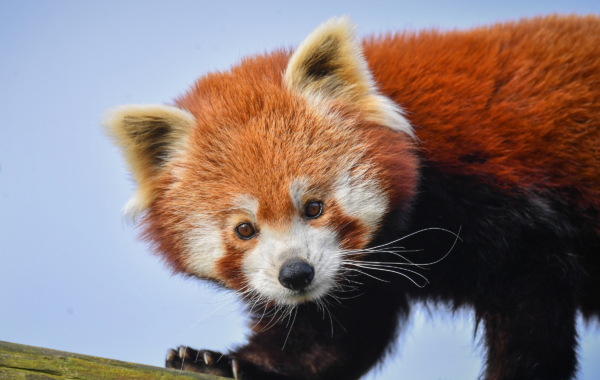
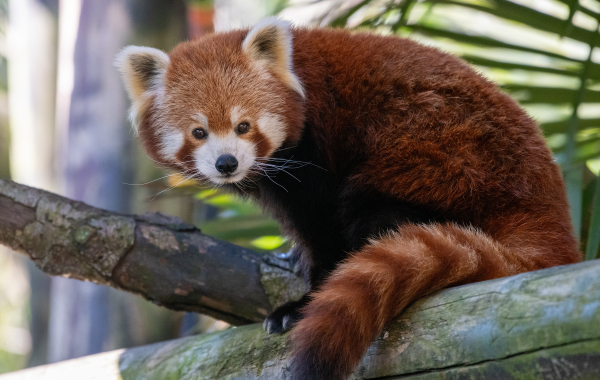
WHAT DO RED PANDAS LOOK LIKE?
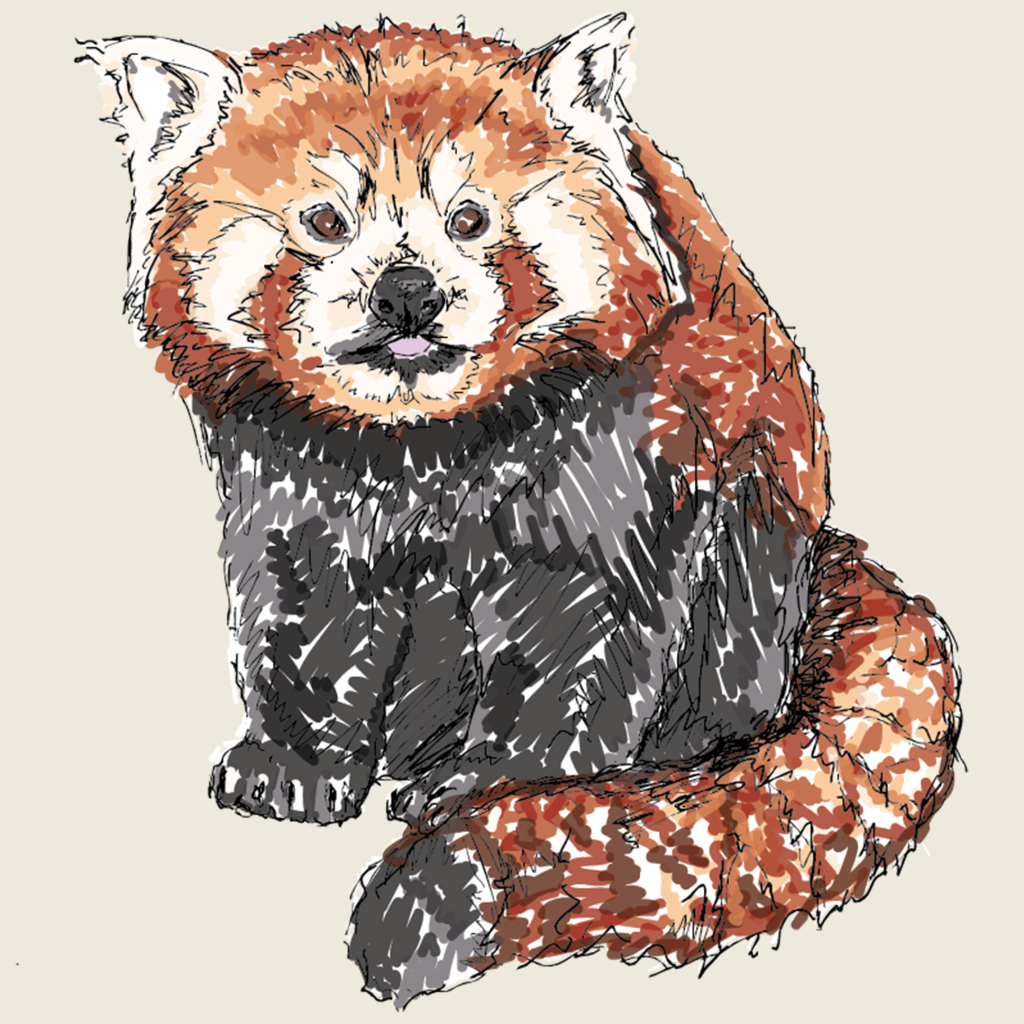
Camouflage Fur
The red fur matches the moss found on the trees where they live. The black on their stomach makes it difficult for predators to spot them looking up into the trees.
Furry Feet
The soles of their feet are covered in fur to help keep them warm and grip onto slippery, mossy branches.
Fluffy Tail
Their tail helps them keep balance while climbing through trees. When it gets really cold, it is used as a blanket to keep them warm.
False Thumb
Like Giant Pandas, Red Pandas have an extra ‘thumb’, which is an enlarged bone for grabbing bamboo stems and tree branches.
WHAT ABOUT THEIR BEHAVIOURS?
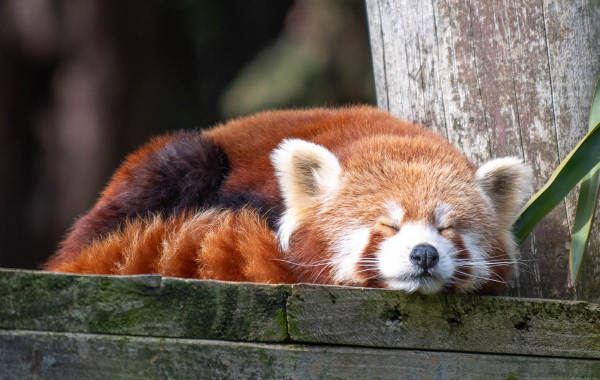
Red Pandas spend 55% of their days sleeping
- Red Pandas are most active in the early morning and late afternoon (Crepuscular).
- They spend most of their time in trees (Arboreal).
- They are normally solitary creatures but come together in pairs in the breeding season.
- Red Pandas often communicate using body language (head bobbing and tail arching) and a variety of noises including the “huff-quack” and a “warning whistle”.
RED PANDA DIET
Did you know that although classified as a carnivore, Red Pandas rarely eat meat.
95% of their diet is bamboo and the other 5% includes eggs, berries, and insects.



WHERE DO RED PANDAS LIVE?
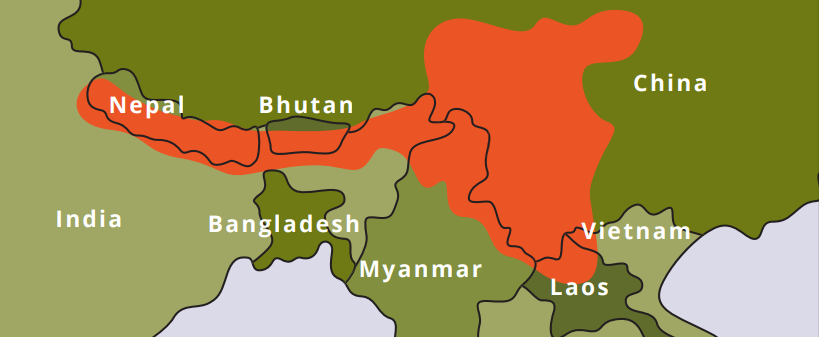
Red Panda Habitats
Red Pandas live in mountain forests of Nepal, India, Bhutan, China and Myanmar (Burma). All Red Panda homes are in Asia’s high altitude temperate forests that have plenty of bamboo.
POPULATION THREATS
Habitat Loss &
Fragmentation
Illegal
Trade
Exploitation of Forest Resources
These reasons, along with disease and climate change have all contributed to the
rapid decline in the Red Panda population.